
Calgary Phil Violist Releases Solo Album Debut
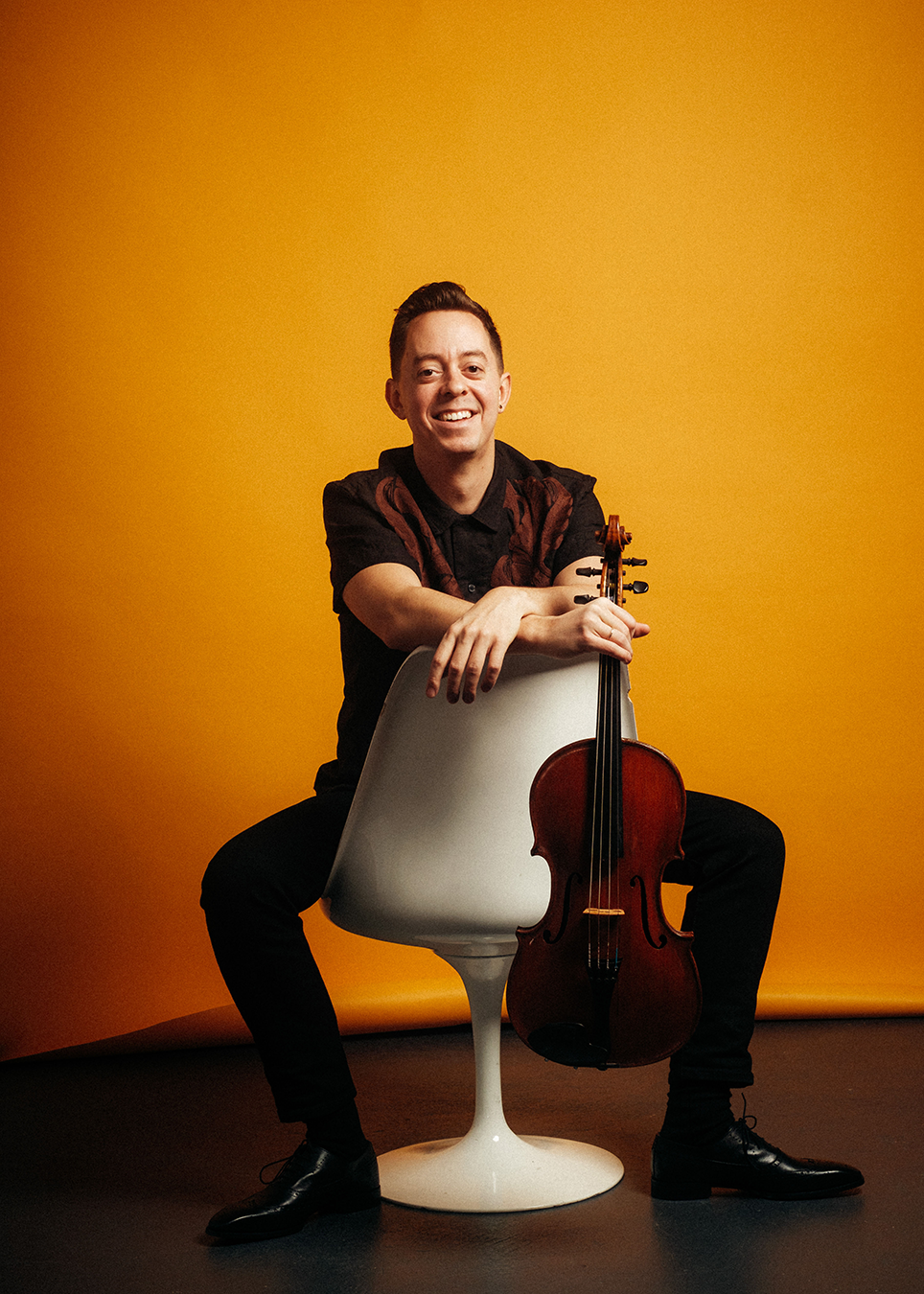
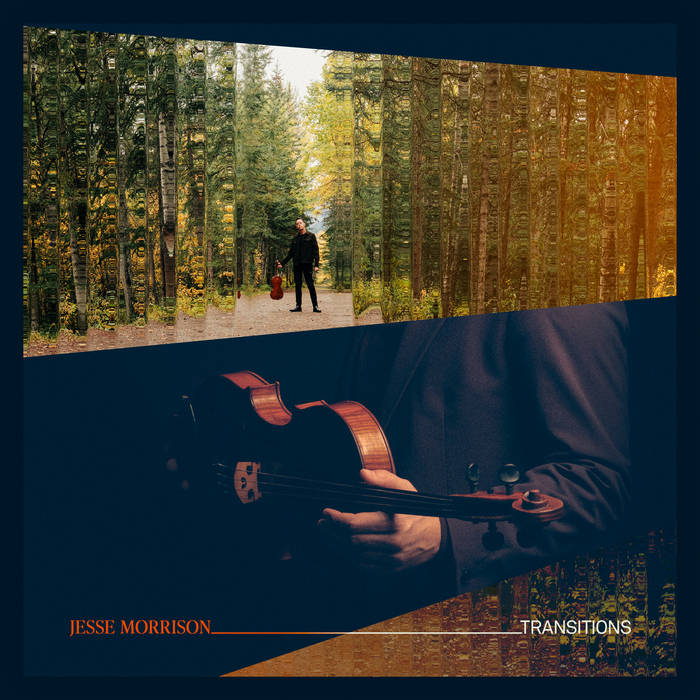
This past Friday (27 February), Calgary Philharmonic Orchestra violist Jesse Morrison released his debut solo album, Transitions. It features a newly commissioned work, Partita for Solo Viola by composer Derek David, as well as the debut recording of Brett Dean’s Skizzen für Siegbert, selections from György Kurtág’s Signs, Games, and Messages, and a viola transcription of Baroque composer Georg Philipp Telemann’s Fantasia No. 1 in E flat.
Transitions is currently available for digital download on Bandcamp as well as for listening on streaming services. A physical release is slated for later this month, and CDs will be available to purchase from the merchandise table in the lobby of the Calgary Phil’s Jack Singer Concert Hall performances.
Morrison, now in his seventh season with the Phil, discussed how the project came to be, how the included compositions tie together, and the leap of faith required to embark on this recording project.
Congratulations on your solo album debut. What does this release mean to you?
The album release means the world to me, as it is a reflection on all of the work that I’ve put into my instrument over all of the years playing music. It also highlights many aspects of my playing in just under 60 minutes of music, which is something that I am proud of. More than anything, this release is a step forward in feeling more acquainted with my dynamics of musical expression and to accept new levels of vulnerability in sharing more of myself with listeners.
How did the recording come to be?
I had been listening to a lot of classical/contemporary albums during the COVID lockdown and the thought of putting together my own project kept circulating in my head. I then decided I’d reach out to a composer friend of mine who I am inspired by and pitched the idea of him writing me a solo viola work to see what interest there was in that on his behalf. After learning that he was intrigued by this proposal, I looked into what types of grants were available to support a project that includes commissioning a new work, recording an album, and other elements that I’d had in mind. I discovered a couple of options, applied for them, and received one from the Canada Council for the Arts — Explore and Create: Concept to Realization. After accepting this award in 2021, the project took off.
Could you tell us a bit more about that new piece?
I commissioned a solo viola work by composer Derek David, who is currently based in Boston and lecturer in music at The Massachusetts Institute of Technology. I asked him for a work in the style of a Bach Suite with contrasting dance movements, to include elements of Schumann’s writing, and then, of course, Derek’s own contemporary voice. I then came up with the rest of what I wanted on my album and shared that with Derek so that he was able to study and analyze each score and composer to create something that was a product from the other three works on the album. After a few months, I went to Boston and met with Derek to go over the sketches he’d made for a few of the movements he’d written so far. We began working things out together in the sense of what worked well for the viola, how things could maybe be better achieved, and sometimes to tweak what register the viola will be playing in a given passage. Outside of learning how to technically achieve some of the more vigorous phrases, we wanted to make sure that this piece would be something future violists would find to be both a challenging and rewarding experience.
How about the other works on the recording – how did you choose the pieces? Is there a common thread linking the composers whose works you have included?
Outside of the idea of commissioning a work, I really love the musical language of composer Brett Dean. Brett had popped into my head one day during lockdown, and so I’d thought to reach out to him and see how he was doing. We had some email exchanges, and he’d mentioned that he’d have some music of his sent my way if I was interested — to which I absolutely was.
After spending some time with his composition, Skizzen für Siegbert, I was absolutely hooked. The power of his musical language spoke to me instantly, and I knew I wanted to include this work in my project.
During my time studying in Boston at the New England Conservatory and working with my former teacher Kim Kashkashian, I fell in love with the writing of György Kurtág; his incredible sense of gesture, shape, and absolute intention behind every breath and movement to reflect exactly how something can be communicated. Both Kim and György have a very long history and friendship together, and she has championed his works throughout her career, so I really feel like I got to directly learn elements of his writing through her teaching. Outside of that, Brett was one of three violists to premiere Kurtág’s Signs, Games and Messages in the ‘90s and had actually shown and worked on Skizzen für Siegbert with Kurtág.
Additionally, Derek also had experience working with Brett some time ago, so the overlap of composers and their encounters with each other is quite fascinating. Having all of that come together into one album is something that I find very interesting — how their individual voices connect.
My inclusion of Georg Philipp Telemann on this album is to bridge the connection of these contemporary voices to that of the Baroque era, which Derek drew from by writing his Partita in the style of J.S. Bach.
The release of this album is a bit of a family affair – could you share about the label on which it is being released?
Transitions has been released under Wolfe Records — a classical music label that my brother Glenn Morrison created. Glenn is a DJ and a multi-platinum selling musician and producer, and he has had a very colourful career over the years. To be able to have my debut album released under his label means so much to me, and I’ve felt so supported and cared for under his wing. Wolfe Records is also a label that my brother is wanting to build and have more artists such as myself release their music under, so I am very glad to be featured on his label.
What are your hopes for this album?
My hopes for this album are that I inspire others to do something that pushes them beyond what they think they are capable of. I find that we as classical musicians can often tell ourselves that “we can’t do that” or “I’m not ready for something that substantial,” because of fear of failure and scrutiny from our peers. While those feelings are very valid, it unfortunately means that we don’t follow through on the things that might actually be something that we become very proud of down the road, much less grow exponentially from. I have learned so much more about myself and what I can do after seeing this project and all of its components through.
Did working on a recording project have you thinking about your instrument in a new/different ways?
Absolutely — it has completely shifted how I view what making music means to me and how I care to communicate my musical language to listeners. It has taught me the importance of time and the relevance of putting a mark on living composers and their voices being heard. It has also made me aware that outside of my love for the viola, it is the voice that I carry with me from day to day that makes what I do with my music unique, and I am so lucky to be able to share that with others.
Get your copy of Transitions or listen online here: https://jessemorrisonviola.bandcamp.com/album/transitions
Latest Posts:
- Alberta in Harmony
- A Woven Experience
- The Spice of Life… and Concert Programing
- 21 Questions with Assistant Principal Bass Jonathan Yeoh
- Many Voices as One